Old School. Biblically Independent.
By Kayleigh Donaldson | Celebrity | December 28, 2025
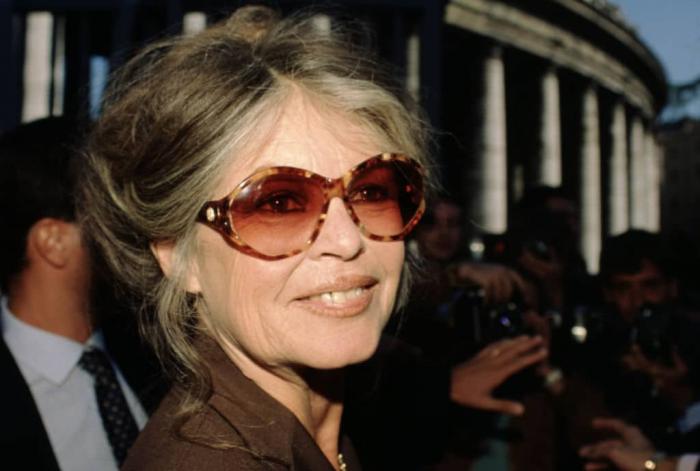
Brigitte Bardot died this weekend at the age of 91. The actress turned animal rights activist was one of the most enduring symbols of the sexual revolution of the late-50s and early ’60s. She worked with the likes of Roger Vadim, Jean-Luc Goddard, and Louis Malle. Serge Gainsbourg wrote songs for her, and Bob Dylan wrote one dedicated to her a “locomotive of women’s history.” After retiring in 1973, she dedicated her life to animal rights, selling her own jewellery to raise funds for causes like opposing the consumption of horse meat and halting the killing of dolphins in the Faroe Islands. She was also a massive racist who was fined no fewer than six times for inciting racial hatred against French Muslims. She was married to one of Jean-Marie Le Pen’s most trusted advisors and endorsed the National Front. In her last public interview in May 2025, she insulted feminist activists who campaigned against sexual harassment, repeating earlier claims she’d made that victims of abuse were “hypocrites” and “ridiculous”. She was a cultural icon who well and truly sucked.
There’s an instinct when someone dies to talk of them in exclusively fawning terms. That’s ‘respectful’, apparently, a way to not speak ill of the dead. it’s ‘too soon’ to get into the weeds of their complicated lives when we commemorate them. Focus on the highlights and write a one-line aside in your closing paragraph about their ‘difficult’ politics or ‘penchant for controversy.’ Such reasoning is understandable. We’re inclined to centre the positive impact people had on the world and their friends, family, and fans. I get wanting to write about Bardot as an oft-underrated actress or someone who did a lot of undeniable good work with animal rights at a time when such activism was often seen as either frivolous or overtly radical. Writers on a deadline may not feel equipped to expand upon those more tangled or discomfiting elements with a 500-word max piece they need to finish within the hour (writing obituaries in this manner is tough, ask me how I know.) Maybe we can talk about, you know, all that later, right?
So, reading many obituaries of Bardot in preparation for a quick radio bit I did this afternoon, I wasn’t exactly surprised by how many of them tried to backflip over her racism and cruelty. Many of them were giddily regurgitating the leering rhetoric she faced during her acting years, which she often found tough to deal with and tried to die by suicide in part because of the endless media attention. Yes, she was a legendary figure of feminine sensuality and was nicknamed the “Sex Kitten” but restraint is a thing, boys. Focus was put on her acting and activism, but you could sense the hesitance to talk about everything else.
We centre her sex appeal because it was a big deal when she was introduced to the world. In the 1950s, post-war and with the pill on the way, Bardot was viewed as the epitome of liberation. In her breakout movie, Et Dieu… créa la femme (And God Created Woman), she played a seductive teenager who ruins respectable men’s lives with her bikini sensuality and amoral view of “family values.” The director, Roger Vadim, was her boyfriend and future first ex-husband, who she started dating at the age of 15. She was viewed as a figure of necessary scandal, a way to get back at the censors who still thought the world was 50 years in the past and women should act as such. That symbolism carried her further than the movie, which plays more as reactionary and conservative than liberating.
But Brigitte was tough to ignore in that era. The beehive hair, the winged eyeliner, the wide open neckline that would be named after her. The bikini became an idol through her. As Hollywood tried to cling to the Production Code that forced movies to punish women who sought romantic and sexual autonomy, Brigitte was one of its most impossible-to-ignore adversaries. It was an image partly defined by men. Sex kittens are meant to be young and aggressive, demanding everything from the gormless but willing men who just can’t say no to youthful vigour. Being a muse sucks. Being a symbol is worse.
What started as revolutionary quickly became the status quo, one Bardot herself seemed eager to enforce in her later years. She was seen as part of “France d’avant”, the dog-whistle-heavy propagandistic image of the nation before “they” appeared: when men were men, women were sexy, and racism was a-okay. In her 2003 book, Un cri dans le silence (A Scream in the Silence), Bardot went on yet another racist rant about “the Islamisation of France” and criticised interracial relationships. She claimed the supposed genetic mixing of races was detrimental to the health of the nation, and explicitly described this as an act of invasion. She had to pay a €5,000 fine over that bout of racism, which she claimed was not racist at all. Her status as a sex icon was helpful fuel for these racist campaigns that called for a return to the “real” France.
Bardot is one of the most important sex symbols in pop culture history and she was also a massive racist with a misogynistic streak a mile wide. This is not a particularly difficult conclusion to come to, nor is it the bastion of nuance many pretend it to be. But it is a mish-mash of seemingly contradictory notions whose blending and cycle of political influencing should be presented as such within any half-decent obituary of the woman herself. No, she didn’t become a weird Islamophobe who victim-blamed women because of her status as an icon. There’s no clear narrative through-line that links together every decision she made because humans don’t work like that. But it’d be foolish for us to pretend that the ways the hard-right in France used her as an image of ‘the good old days’ weren’t key to her enduring appeal and her own beliefs.
To separate that from one’s pleasant memories of her singing “Bonnie and Clyde” or being painted by Andy Warhol leaves us and her with an unfinished portrait. If Bardot didn’t want her legacy to be defined by her own words, she wouldn’t have said them.


