
Old School. Biblically Independent.
By Kayleigh Donaldson | Celebrity | June 11, 2026
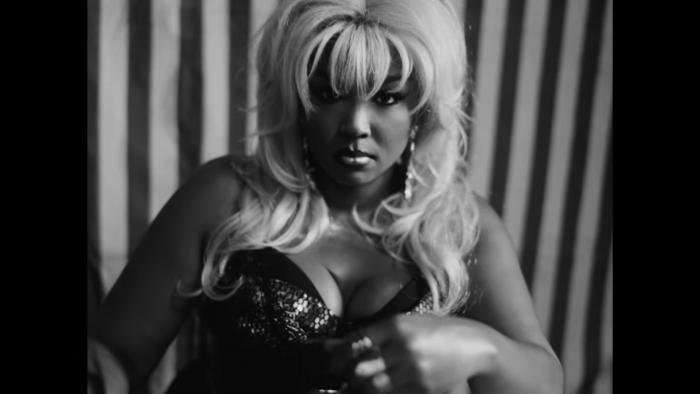
Did you know that Lizzo had a new album drop last week? The fifth studio album from the Grammy winner, titled, uh, B*tch, was released on June 5th. It does seem weird that one of the biggest pop stars of the 2020s could suddenly be so under the radar. In an interview with USA Today, Lizzo said that this album was about “reclaiming” who she truly is, and that “a lot of [her] identity has been manipulated by people outside of [her].” So far, the critics’ responses have been pretty mixed-to-negative. The Guardian said it was a sign of Lizzo’s inability to evolve with the times, while The Arts Desk described it as “deeply uninspired” and “a hollow repetition of much better songs” from her earlier albums.
It’s unlikely that B*tch will challenge Drake, Morgan Wallen, or Michael Jackson on the Billboard album charts, if only because social media is chock full of people confessing they had no idea Lizzo even had a new album in stores. This is something Lizzo herself is aware of, as she responded to one fan’s confusion on Twitter by claiming, “The industry changed so much in the last 3 yrs. streaming replaced radio & I was a radio darling. That’s how my fans discovered my music. Not to mention the very obvious & public attack on my career changed things.”
She’s not wrong about the continuing relevance of radio, even in 2026. Country singer Ella Langley’s mega-success over the past year is largely down to radio play (which is a sign of her acceptance from the Nashville establishment given that country radio is as dictatorially controlled as entertainment can get.) But this explanation overlooks a lot of hard facts. Lizzo was a big radio hit but she was also huge on streaming. Indeed, “Truth Hurts” went viral two years after its initial release, causing her record label to re-release it for radio. Lizzo is an artist whose rise was a combination of old-fashioned touring and word-of-mouth and highly modern, perennially-online mythmaking. Now, however, it’s just not hitting the way it used to. Why?
We obviously can’t overlook what Lizzo mentioned in that tweet, the lawsuit filed by several former backup dancers accusing their one-time boss and production company for a host of charges that included harassment, assault, and weight-shaming. Lizzo denies all the allegations, although, in 2024, some sexual harassment and racial and religious discrimination allegations made against her were upheld by a judge. The accusation that the most prominent figure in body positivity and self-love was, allegedly, a bully behind the scenes certainly put a dent in her image, which put off many of her fans who were drawn to her music through her joyous proclamations of community and beauty at any size.
That wouldn’t account for such a drop off in her sales, though. Even with the element of hypocrisy that undeniably changed how many people saw Lizzo and her brand, casual listeners, who made up the bulk of her sales, were unlikely to know or care. Time and time again, we’ve seen how abhorrent allegations do little to hurt an artist’s career. Just ask Chris Brown, who Lizzo once described as one of her favourite people.
Lizzo’s changing body is often cited as another reason fans revolted, but I don’t buy this either. There is the Meghan Trainor problem at play - how does your career change when you know longer physically align with the messages of your most popular songs? - but Lizzo was always singing about things other than her butt. Her proclamations of bad bitches and feeling good as hell were not dependent on her size, and even if they were, it’s not like being a pensioner has stopped Pete Townsend from singing, “I hope I die before I get old.” For me, I think it’s more a matter of style than message.
When I think of Lizzo, I think of barre class workouts, girlbosses, and bachelorette parties. I think of supermarket music and ads for shampoo. To me, her sound is so inextricably linked to a particular kind of, to put it simply, “yas queen” messaging that was so specific to its moment in time that it feels retro, even only a few years later. Her music was proudly raunchy and yet it never felt like it. Anyone could enjoy it and they did. Even your aunt who hates swearing and has way too many thoughts about twerking liked “Juice.” Being for everyone is a tough territory to inhabit because eventually you have to evolve and so will your audiences. That pastel sound of you-go-girl positivity didn’t feel as at home in 2025.
And Lizzo knew that, because B*tch is her attempt to get away from that burden. Who can blame her for not wanting to be the canvas on which every cycle of Discourse is projected onto? Meghan Trainor also had to deal with it and she was always way less interesting musically than Lizzo. She wanted to flex her muscles and show off her skills. Lizzo is extremely talented. She got the Prince seal of approval for a reason. She’s a brilliant flautist, she has the vocals, and a keen ear for retro and modern fusion. I certainly believe she’s capable of some weird experimentation or even another chart topper. But B*tch, while not awful and with a couple of pretty good songs, felt dated, and, dare I say it, kind of bitter. And Lizzo cannot pull off bitter.
It may simply have been the end of Lizzo’s time as a megastar, and there’s nothing weird or unexpected about that. Very few stars get to the top and stay there for most of their careers. It’s what makes people like Madonna, Beyoncé, and Taylor such anomalies (and even they’ve had a couple of commercial disappointments through their zenith runs.) The infrastructure simply does not allow for this oversaturation. Pop’s ecosystem requires all levels of fame: the one-hit wonders, the cult favourites, the mid-tier B-List-and-proud-of-it critical darlings, and the singers who were big for a moment in time then evolved. Some artists inspire ardent devotion while others have fans who are only there for the bops. For every Janet Jackson, there were ten Paula Abduls.
Fame is fickle and so are audiences. It takes generational talent, an unbeatable work ethic, and sheer dumb luck to be a star for a sustained period of time. You can be defining for a period but for a true era? That’s tougher. Just ask Katy Perry. It would be perfectly respectable for Lizzo to move down a tier of fame and continue as a more niche performer, one who still sells out mid-sized venues and gets her songs played on Netflix series. Would she be satisfied with that?


