
Old School. Biblically Independent.
By Kayleigh Donaldson | Celebrity | July 14, 2026
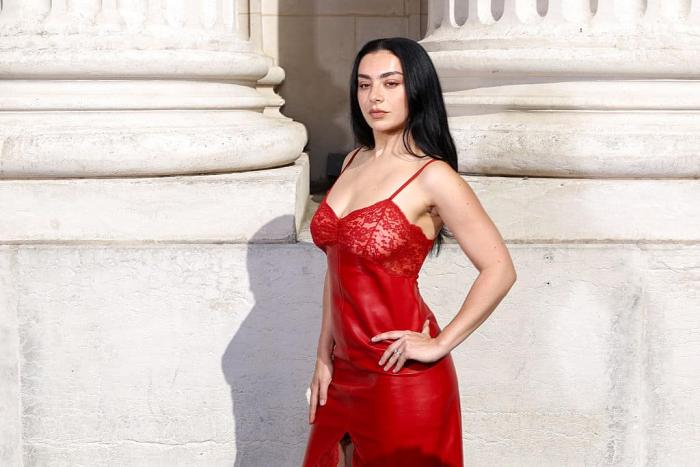
Marketing is dead. long live anti-marketing. That's the message from Charli XCX as she revs up to launch her next album. On Twitter, she shared her ideas for the future. "truly believe anti marketing will become a thing soon... still marketing but it's just a different approach, more intimate, personal, private, one on one. less about the projection of scale. i'm into it xx"
For anyone wondering what anti-marketing is: It's marketing. They're the same picture. Look, I get what she's trying to say: audiences are sick of being sold to as one in a billion, and in the fight for attention post-monoculture, people need more than a slogan to get them interested in an artist. But this is also nothing new. Indeed, it's been around for quite some time and is something she and other big-name artists have perfected.
In a post-Brat world, Charli XCX has never been more amplified. For most of her career, she was the too-cool-for-school hyper-pop singer whose songs were beloved by every critic you knew but seldom gained mainstream success. But then she made what seemed like an intensely uncommercial album and it became one of the pinnacles of the 2024 zeitgeist. That aggressive club-rave dance-pop, coupled with that shade of lime green, were inescapable, and the in-yer-face attitude of the album felt like exactly what we needed in a very difficult year. Finally, Charli was a breakout star, earning a Grammy, a slew of big-name collaborations, and a somewhat one-sided feud with a showgirl.
It also means that her next album, Music, Fashion, Film, will be far more hyped than any of her predecessors (and I'm including the soundtrack for "Wuthering Heights" in that. So far, it's being sold as the antithesis Brat, complete with a rock song that mocks rock and a declaration that the dancefloor is dead. Its album art features John Cale, Marc Jacobs and Martin Scorsese, which is objectively incredibly cool. But is it an example of anti-marketing? Probably not. It's more anti-Brat, frankly, moving away from that era's '90s club culture influences and into something that confronts the image made by that mega-hit.
That's something she's been doing a lot lately, including with The Moment, a meta drama where Charli played herself in a battle between integrity and business. In that film, she plays out the nightmare version of the Brat cycle, wherein she stumbles into pure sellout territory as her American record label seek to capitalise on organic success and mould it into something "safer" for a wider audience. While the core of The Moment certainly speaks to something familiar about the current era of pop and the terror of trying to retain your truth amid sponcon and social media, the satire feels somewhat defanged. You never get the sense that Charli, the real or fictional one, would so quickly find herself shilling for a credit card or giving into the cheapened rewrite of her image. The anxiety of the predicament is real but the execution falls flat. Frankly, it's all stuff better suited to her music than her acting (although she will be in a hell of a lot of film over the next year or so.)
Charli is an intriguing artist to talk about because she often seems confused as to what kind of famous she wants to be. She broke out with a duet with Iggy Azalea in the 12-month period where the white rapper was a big star, then she veered back into very uncommercial music that she frequently seemed frustrated wasn't doing better. Before Brat, she made Crash, which was her attempt to go mainstream, and then she publicly criticised that album as bad (it's not.) It was her "major sell-out" record that was also meant to be pastiche on selling out. It kind of works but that's a hard thing to market, and a tough notion for many listeners to embrace. That Brat was as big as it was despite the seeming lack of radio appeal is a minor miracle.
But that album was also heavily marketed in a rather traditional manner. That particular shade of lime green (Pantone 3507C) popped up on posters around hip locations. A wall in Greenpoint, Brooklyn, which fans dubbed the "brat wall", was painted and repainted with the album's green shade and various messages over the summer of 2024. Every minor change of the album cover was extensively covered. Great hype is self-fulfilling, pushed by a clear message and definable traits. Everything about Brat was easily digestible, from the title to the mood. That's why it found its way into every aspect to life, including, bleh, politics.
The most anti-marketing part of it came when Charli shared what seemed to be a list of marketing ideas her record label had for the cycle, including a Charli XCX for President joke. The ideas all sucked, and by sharing them with the world, Charli's rejection of them became the big selling point. I think this is partly what she meant in that otherwise hazy tweet: gimmicks created in a boardroom will always reek of fakeness and audiences can sniff it out like bloodhounds, so aim for something that feels real.
The flipside of that is that marketing can only get so close to authenticity before it swings into pure parasocial mimicry. How do you intimately market an album? One-to-one, as Charli suggests? Private DMs or WhatsApp messages (which kind of already exist)? Smaller gigs and get-togethers, maybe listening parties with the hardcore fans, which Taylor Swift has a history of doing? I am curious as to what Charli has planned for her current promotional responsibilities in this regard. It seems like it could be messy, but that is also very her style. Personally, if I'm a famous singer with very attached fans, I'm staying as far away from them as possible.
Honestly, I think Music, Fashion, Film will see Charli go back to her more niche roots. Being A-List seems like something she's had a taste for but isn't entirely comfortable with, and it seems unlikely that her new music, which is as raw and confrontational as ever, will have Drake or Morgan Wallen's 79+ songs albums fearing for their places on the Billboard charts. I don't think that's a bad thing. We need our pop provocateurs and those who aren't minutely obsessed with Spotify streams. But Charli has reminded us of the eternal truth in celebrity: everything is marketing. Even anti-marketing.


